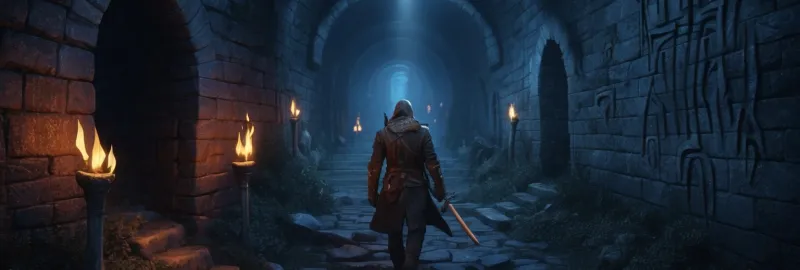
The ancient corridors of the Black Knife Catacombs in Elden Ring draw in both the curious and the brave, luring adventurers with promises of hidden rewards amid relentless dangers. Beneath the calm facade of Liurnia's northern reaches lies a labyrinth of crumbling halls and long-forgotten secrets. As you prepare to traverse these shadowed depths, the interplay of risk and reward stands clear. Each step forward summons the echoes of past conflicts, while treasure-laden pathways reveal opportunities to refine your arsenal and strategy. This passage through history is not simply about survival but about discovering pieces of lore, relics, and powerful items that strengthen one's resolve to face even greater challenges farther ahead.
Navigating the Veiled Entrance
Embarking on the journey into the catacombs begins at the northern edge of Liurnia, where paths silently lead upward near the Minor Erdtree. The approach is subtly marked on the map, encouraging travelers to ascend from the 'Eastern Tableland' Site of Grace before veering east at a fork. Standing sentry by the entrance, an enigmatic headless knight sets the somber tone for the trials that await inside. As you descend a series of dark, winding stairs, the atmosphere shifts from the vibrant energy of the overworld to a realm where ancient spirits seem to watch over every move. The humble terrain conceals deadly mysteries, making early caution critical, as every careful step cannot fail to acknowledge the presence of haunting legends and perilous encounters.
The Dance of Skeletal Foes
Once within the depth of the catacombs, you soon encounter the recurring menace of reanimated skeletal warriors. These foes embody the sinuous persistence that makes the dungeon so fearsome; despite being shattered, their remnants quickly reassemble unless effectively neutralized. The skeletal guardians are strategically placed, ensuring that players must carefully clear each chamber to prevent overwhelming numbers from converging upon them. Mastery of timing and precision in combat is essential, as failure to disrupt the spectral remnants means facing an endless cycle of skeletal challengers. This recurring encounter provides ample opportunities for resource management and tactical adjustment, reminding every explorer that the undead are not merely obstacles but intricate parts of the dungeon’s design that echo the ancient and mystical nature of Elden Ring.
Unraveling Hidden Chambers and Relics
Exploration does not only entail combating relentless foes. In one notably dim area of the catacombs, concealed passages reward the brave with unique relics and consumables. Upon passing the room adjacent to the looming boss door, careful examination yields intimate treasures such as Root Resin and the mystical Grave Glovewort items, each carrying its own utility and lore significance. These discoveries encourage a methodical approach to exploring the maze-like interior, where every junction could unveil items that bolster your powers or even hint at the deeper legends connected with this forsaken underground world. As you trace the subtle signs of past conflicts etched into the walls, the melding of hazard and fortune reinforces the notion that the catacombs are as generous as they are dangerous.
A Venue of Shifting Dangers and Blade Traps

The path within the catacombs is punctuated by areas where physical traps and spectral ambushes combine to challenge even the most seasoned travelers. One chamber, in particular, presents a trifecta of imposing guillotine-like blade traps that descend with an almost rhythmic regularity. The presence of these mechanized hazards forces you to time your passages with precision. The environment here is designed to test Not merely your combat prowess, but also your spatial awareness and agility. At one moment, escaping these blades requires a strategic pause, while the next demands swift movement to evade unexpected bursts of mechanical fury. This juxtaposition of ancient magic and crude engineering underlines the catacombs’ dual nature—a place where every corner hides either opportunity or imminent peril, urging constant vigilance.
Aquatic Hazards and Unearthly Guardians
Progressing further, the catacombs reveal a flooded area where the ambient light fades into eerie reflections on ripple-covered floors. In this watery expanse, scavenged relics and resources lie within reach, yet are fiercely protected by formidable crab-like creatures that inhabit the submerged corridors. These guardians are not merely incidental obstacles; their ominous presence transforms what appears to be a treasure trove into a precarious risk. As you gather items from the surrounding debris, the natural instinct to retreat is tested by the sudden incursion of these crustacean defenders. Each careful step in the water demands awareness, for the aquatic guardians strike with a coordinated ferocity that challenges both your combat skill and your ability to balance speed with caution in a setting where the dynamics of land give way to liquid hazards.
Encounters with Necromantic Forces
Beyond the initial forays and mechanical traps, the catacombs dive deeper into the realm of magical terror. A foreboding corridor leads you into the domain of necromancers, where the air thickens with a corrupt energy. In this narrow passage, skeletal figures rally under the command of an unseen sorcerer, their patterned movements a haunting dance of unyielding undead might. The necromancer’s influence not only animates the dead but also alters the very architecture of the space, creating a symbiotic relationship between magic and decay. As you confront these forces, the requirement to disrupt their dark enchantments becomes as crucial as the physical defeat of their minions. This segment of the journey tests your resolve in embracing both combat prowess and an understanding of the catacombs’ mystical underpinnings.
Subterranean Secrets and Unlockable Passages
Adventuring through the maze-like corridors often rewards individuals eager to explore off the beaten path paths. One notable divergence involves utilizing a Stonesword Key to unveil hidden chambers concealed behind imp statues. Such paths are often guarded by additional skeletal combatants who serve as both protectors of the secret and participants in the dungeon's complex design. For instance, after carefully dispatching these guardians, one can acquire weapons and additional relics like Rosus' Axe, which further underscore the importance of thorough exploration. The subterfuge of cracking open these concealed walls with a decisive sword strike serves as a reminder that the dungeon is layered not only in adversity but also in mystery—each hidden niche holds the potential for discovery that enhances your expedition into the broader, sorrowful tapestry of Elden Ring's lore.
The Gauntlet of Ledge Traversal
With danger steadily rising, a narrow ledge accessible via a sinking platform presents another formidable challenge. Here, the environment interlocks treacherously with the enemy patterns. While the mechanism of platform descent may seem to offer reprieve, the terrain itself is fraught with lurking skeleton archers and an ominous necromancer, each poised to disrupt your progress. The path along the ledge is defined not only by physical vulnerability but also by the interplay of intermittent hazards, forcing you to time your movements in a delicate balance of offense and defense. In this elevated milieu, the mingling of precarious footing with strategically positioned foes manifests the core essence of the catacombs: a place where every step forward requires calculated risk and where the specter of unseen danger remains ever-present, urging an adaptive and measured approach.
The Masked Duel in Fogbound Chambers
Deep within the labyrinth, an intriguing and challenging encounter awaits behind a deceptive wall—an area that reveals itself only upon a well-placed sword strike. Here, shrouded in an dense fog that distorts sight and sound, a solitary enemy known as the Black Knife Assassin emerges. This A mysterious persona serves as an enduring symbol of the… layered complexity of the catacombs; not only does the fog create natural cover, but it also amplifies the tension of the ensuing duel. The mechanics of this fogged confrontation require an adept mixture of patience, spatial awareness, and swift response to shifting threats. The assassin's tactics juxtapose stealth and aggression, challenging you to calibrate your critical strikes with remarkable precision. This eerie duel "bolsters the idea that hidden beneath the exterior of" the catacombs lurk encounters that are as psychologically taxing as they are physically demanding.
The Interplay of Lever Mechanics and Obscured Paths
Further exploration reveals intricate environmental puzzles that intertwine with the site’s core combat dynamics. An alcove filled with Ghost Glovewort and multiple levers signals the presence of deeper mechanisms at work, manipulating both door access and the movement of gates. The levers, seemingly mundane on their own, hide the potential to either unlock treacherous pathways or provide a strategic advantage by temporarily disarming nearby hazards. These mechanics force players to engage in a form of tactical problem-solving that complements the more visceral aspects of combat. Every pull of a lever is laden with the anticipation of either reward or a sudden twist in enemy patterns. This design element underscores the catacombs’ nature as a living puzzle—a space where every lever and hidden switch contributes to an overarching narrative of risk, reward, and ancient design.