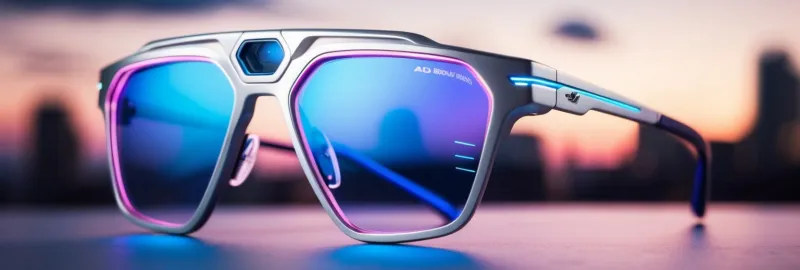
This article highlights how recent advancements in lens technology are reshaping traditional eyewear. Contemporary solutions now harness smart features that adjust to the wearer's visual demands instantly.
Centuries ago, a pioneering designer created bifocal lenses that offered a long-lasting solution. However, today's technology has surpassed that invention by using innovative materials and electronics.
A Finnish company has developed glasses incorporating adaptive lenses that use sensors to follow eye movements. Liquid crystal elements then modify the lens properties right away, ensuring the correct focus for different distances. This breakthrough is particularly valuable for individuals who struggle with focusing on near and far objects, as conventional lenses force them to concentrate on predetermined areas.
Older methods often come with high costs and require users to undergo a period of adjustment. In addition, even lenses featuring gradual transitions may still suffer from visual distortions along the edges.
The new dynamic lenses are engineered to support near, intermediate, and far vision using a unified design. They are designed so that nearly the full surface of the lens is usable, with close-up viewing occurring in an optimal region and distance viewing engaging the entire lens area.
Upcoming release plans suggest the eyewear will be available within the next 12 months at a premium price. The pricing strategy reflects significant investment from recent funding, providing both innovation and a sustainable revenue model.
The glasses feature a remarkably light design, with the latest prototype weighing only 22 grams. In addition, the power system is integrated magnetically into the frame and remains discreetly hidden.
- Adaptive lenses that adjust instantly to eye movement
- Liquid crystal technology for real-time prescription changes
- Enhanced versatility for near, intermediate, and far vision
- Sleek, lightweight design at only 22 grams
- Discrete magnetic charging system built into the frame